

Deadline optimisation in valve machining is a critical factor for competitiveness. In sectors such as energy, petrochemical, and oil & gas, where industrial valves are part of strategic systems, delays in manufacturing or repair can result in plant shutdowns with a major economic impact. Reducing lead times without compromising quality requires a comprehensive approach that combines planning, process control, and technical capability.
Technical Planning from the Initial Phase
Reducing lead times starts before machining begins. A detailed analysis of the component — its tolerances, material, and service conditions — makes it possible to define an optimised manufacturing strategy. In large-scale valve machining, where operations involve multiple phases and complex movements, the sequencing of operations is a determining factor.
Planning covers not only the machining itself, but also tooling availability, the need for complementary operations such as repair, welding or heat treatments, and coordination between departments. Anticipating these factors prevents interruptions and rework, reducing unproductive downtime.
Process Integration as a Key Factor in Efficiency
One of the most important elements for shortening lead times is the ability to offer an integrated service in valve machining. Bringing processes together within a single production environment eliminates time lost to external transport, waiting between suppliers, and poor coordination between phases.
When machining, welding, non-destructive testing, and dimensional inspection are managed jointly, the workflow becomes continuous and controlled. This integration not only reduces time but also improves traceability and enables early detection of deviations, avoiding late-stage corrections that penalise delivery times.
Efficient Tooling and Resource Management
In an industrial valve machining workshop, the availability and organisation of tooling have a direct impact on setup times. Standardising tools, combined with digital management of their storage and location, can significantly reduce setup times.
Furthermore, reusing specific tooling developed in previous projects provides a clear competitive advantage. In valve machining, where each project may require tailored solutions, having a system that preserves and manages this technical knowledge allows for shorter design and manufacturing phases for new tooling.
Quality Control Integrated into the Process
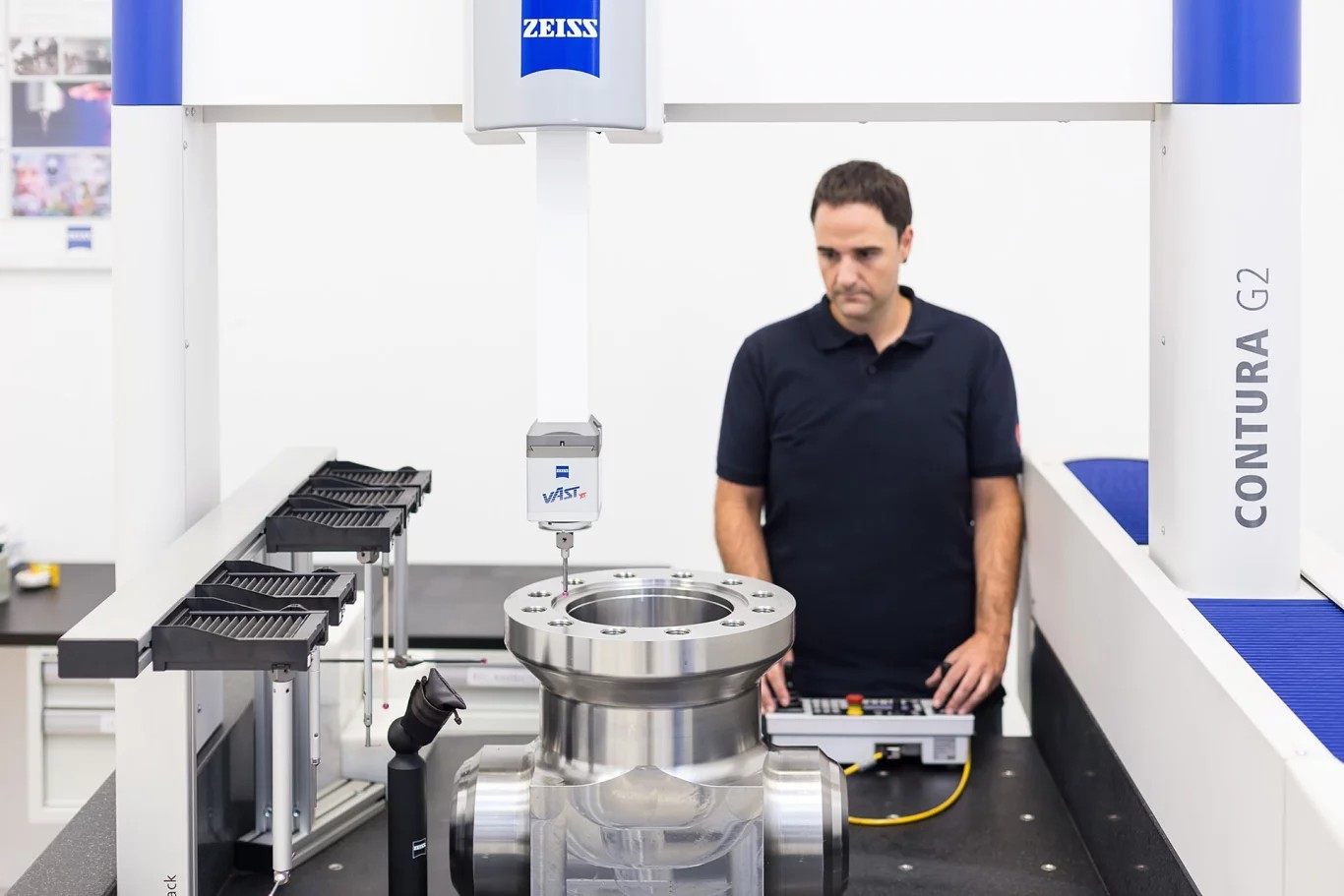
Reducing lead times does not mean reducing controls. On the contrary, real optimisation is based on integrating quality control into the production process itself. Dimensional verification during the various machining phases allows deviations to be detected early, preventing rework at advanced stages.
For critical components — especially large industrial valves — non-destructive testing and geometric inspections must be planned as part of the workflow, not as a standalone final phase. This approach reduces uncertainty and ensures that each operation is validated before moving on to the next, maintaining quality without creating bottlenecks.
Digitalisation and Production Control
Digitalising production processes provides complete visibility into the status of each project. Production control systems allow teams to monitor timings, identify deviations, and optimise resource allocation in real time.
In large-scale valve machining, where cycle times are long and the resources involved are critical, this monitoring capability enables agile decision-making and planning adjustments without compromising quality or the deadlines committed to the customer.
Arri: Efficiency and Control in Valve Machining
At Arri, deadline optimisation is part of an industrial strategy built on process integration and thorough control of every project phase. As an industrial valve machining workshop, the company approaches each order from a global perspective, aligning technical planning, resource availability, and cross-department coordination to reduce lead times without compromising final quality.
Its integrated service approach to valve machining allows it to manage machining, repair welding, dimensional inspection, and non-destructive testing entirely in-house, eliminating external dependencies and ensuring a continuous workflow. This capability is particularly relevant in large-scale valve machining, where the complexity of the parts demands precise coordination and efficient management of preparation and execution times.
In addition, the experience accumulated across previous projects, combined with structured tooling management and technical expertise, allows Arri to shorten development timelines and respond swiftly to new requirements. All of this translates into greater reliability in delivery schedules, cost optimisation for the customer, and a quality guarantee for every component manufactured.


