

The liquefied natural gas (LNG) market presents significant challenges for engineering and equipment manufacturing due to low operating temperatures, process pressures and the safety requirements inherent to the supply chain. In this context, valve machining becomes a critical element: every component must ensure tightness, durability and predictable performance, from the extraction process of liquefied natural gas through to its transport, storage and regasification.
LNG and Extreme Operating Conditions
Liquefied natural gas is produced through a liquefaction process that reduces the temperature of natural gas to approximately -162 °C. These cryogenic conditions impose very strict requirements on the materials, dimensional tolerances and surface finishes of all components in contact with the fluid.
For this reason, LNG valves cannot be considered standard components. They must ensure absolute tightness, mechanical resistance to severe thermal cycles and predictable behaviour under highly controlled opening and closing regimes. Any deviation in machining may compromise the integrity of the entire system.
The Role of Precision Machining in Cryogenic Valves
Cryogenic valves used in LNG facilities, both in liquefaction plants and in storage and transport terminals, require high-precision machining processes capable of guaranteeing very tight tolerances and consistent repeatability.
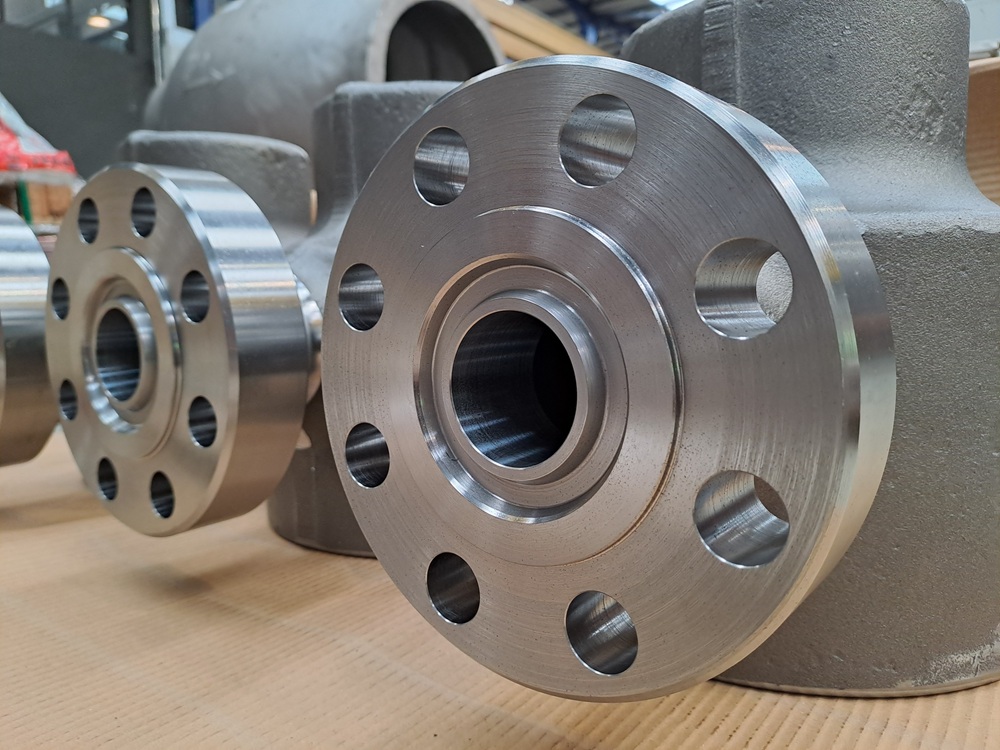
Aspects such as body coaxiality, flatness of sealing surfaces and the quality of the finish on seats and obturators are decisive for valve performance at cryogenic temperatures. State-of-the-art CNC machining, combined with advanced metrology control processes, makes it possible to meet these requirements, even in complex geometries and materials that are difficult to machine.
Critical Materials and Manufacturing Challenges
One of the greatest challenges in machining valves for LNG lies in the selection and treatment of materials. Austenitic stainless steels, nickel alloys and special materials certified for cryogenic service are common in this sector due to their toughness at low temperatures and resistance to embrittlement.
However, these materials present significant machining challenges: work hardening, heat generation in the cutting zone and accelerated tool wear. Overcoming these difficulties requires a combination of metallurgical knowledge, optimised machining strategies and appropriate selection of tooling and cutting parameters.
Safety Valves and Regulatory Compliance
Within the LNG ecosystem, the natural gas safety valve plays a fundamental role in protecting people, equipment and infrastructure. These valves must respond precisely to overpressure situations, even under cryogenic operating conditions, which demands impeccable design and machining.
Compliance with international standards such as API, ASME, EN or ISO affects not only conceptual design but also every stage of the manufacturing process. Machining must ensure traceability, dimensional consistency and compatibility with non-destructive testing, leak tests and functional validations required by the sector.
Applications in Regasification Plants
Liquefied natural gas regasification plants represent one of the most critical environments for the operation of cryogenic valves. In these facilities, valves control flows at different pressures and temperatures during the transition from the liquid to the gaseous state, a process that requires maximum operational stability.
The machining of valves intended for regasification must consider not only the initial cryogenic conditions but also the thermal and mechanical variations during continuous operation. Precision in bodies, bonnets, stems and sealing systems is essential to prevent leaks, minimise maintenance and extend equipment service life.
Innovation and Specialisation as a Competitive Advantage
The evolution of the LNG market is driving growing demand for more efficient, compact and reliable solutions. This results in increasingly sophisticated valve designs that require advanced machining capabilities and close collaboration between engineering, production and quality control.
Specialisation in precision machining for LNG valves enables manufacturers to position themselves as strategic technological partners within the supply chain. The ability to adapt processes to new designs, materials and regulatory requirements becomes a key differentiating factor in a highly competitive market.
Arri and the Machining of LNG Valves
The liquefied natural gas market requires industrial solutions capable of guaranteeing reliability, safety and precision under extreme operating conditions. In this context, Arri provides strong production capabilities in precision machining of LNG valves, focused on manufacturing critical components for cryogenic valves and natural gas safety valves, meeting strict tolerances, regulatory requirements and high quality standards.
Thanks to its experience, advanced CNC technology and knowledge of applications in infrastructures such as liquefied natural gas regasification plants and the liquefied natural gas extraction process, Arri positions itself as a reliable industrial partner for valve manufacturers and projects within the LNG sector, contributing directly to the safety, efficiency and durability of energy installations.


